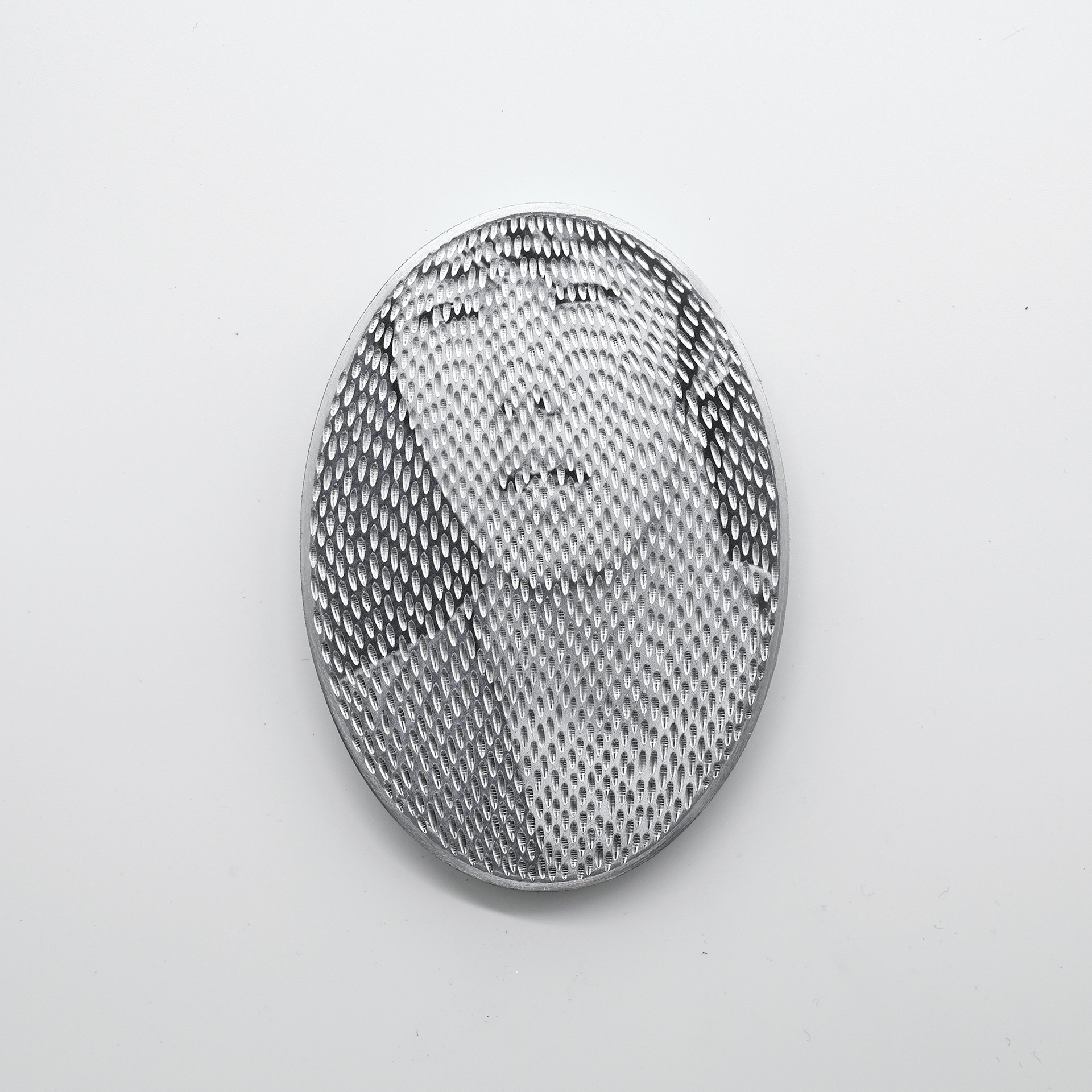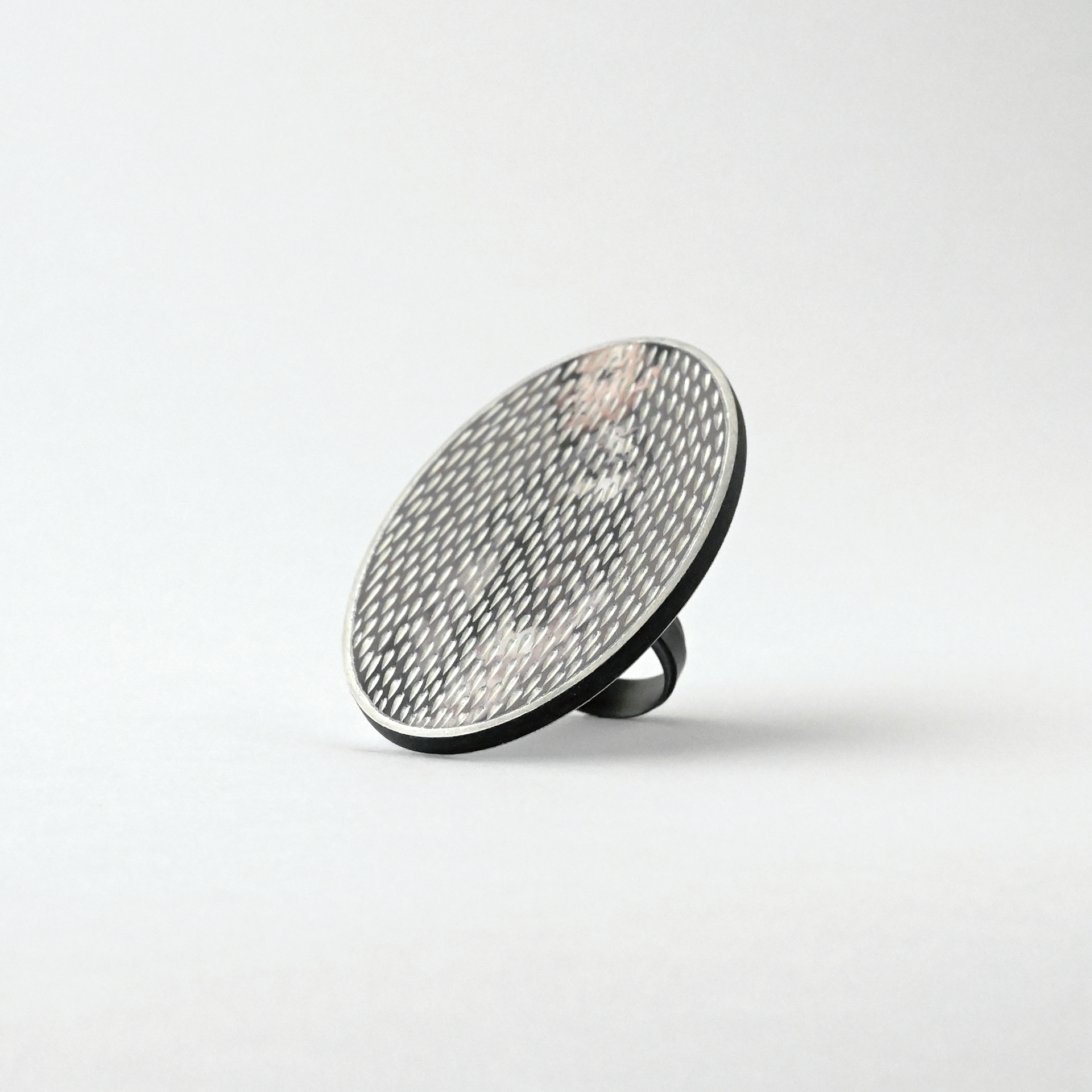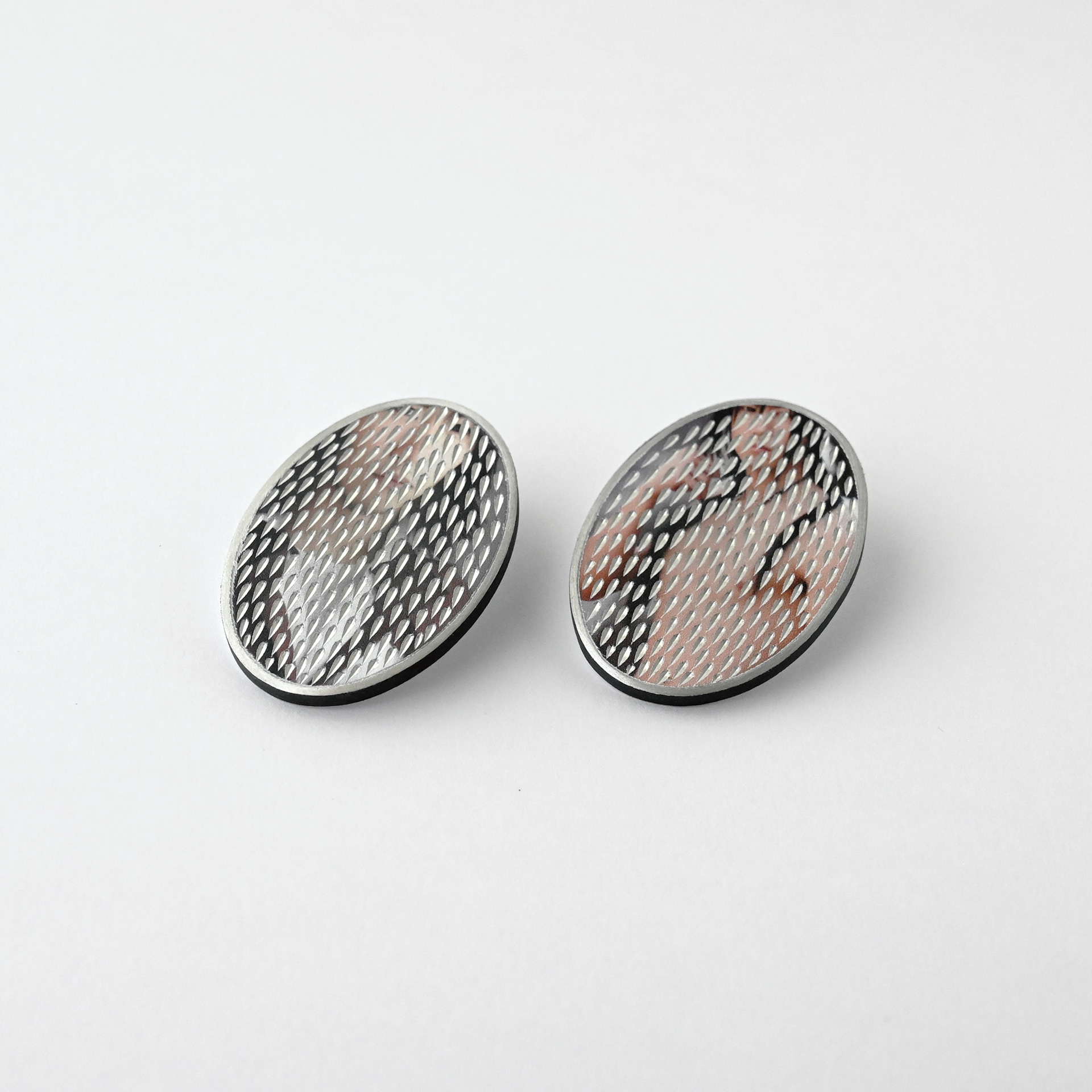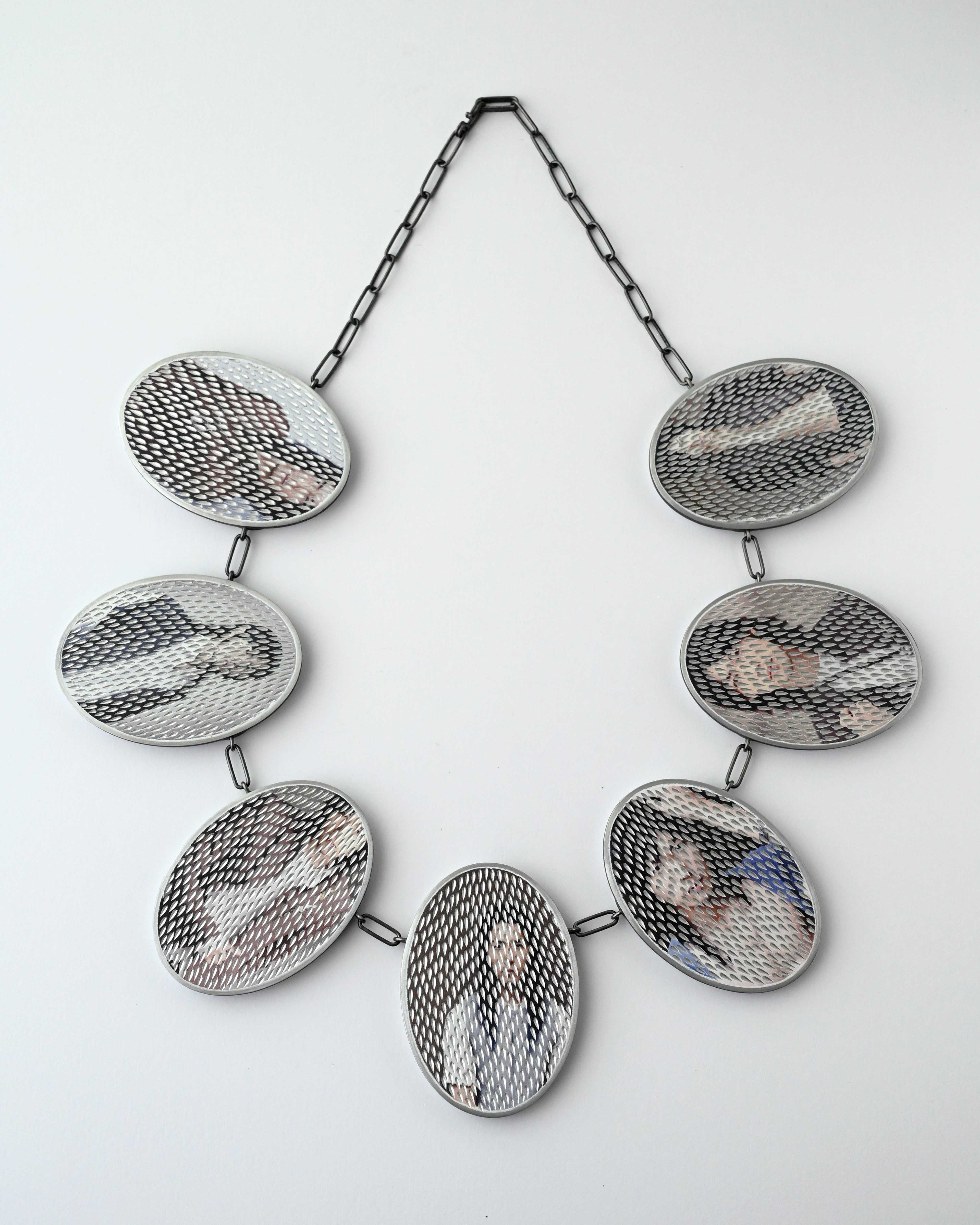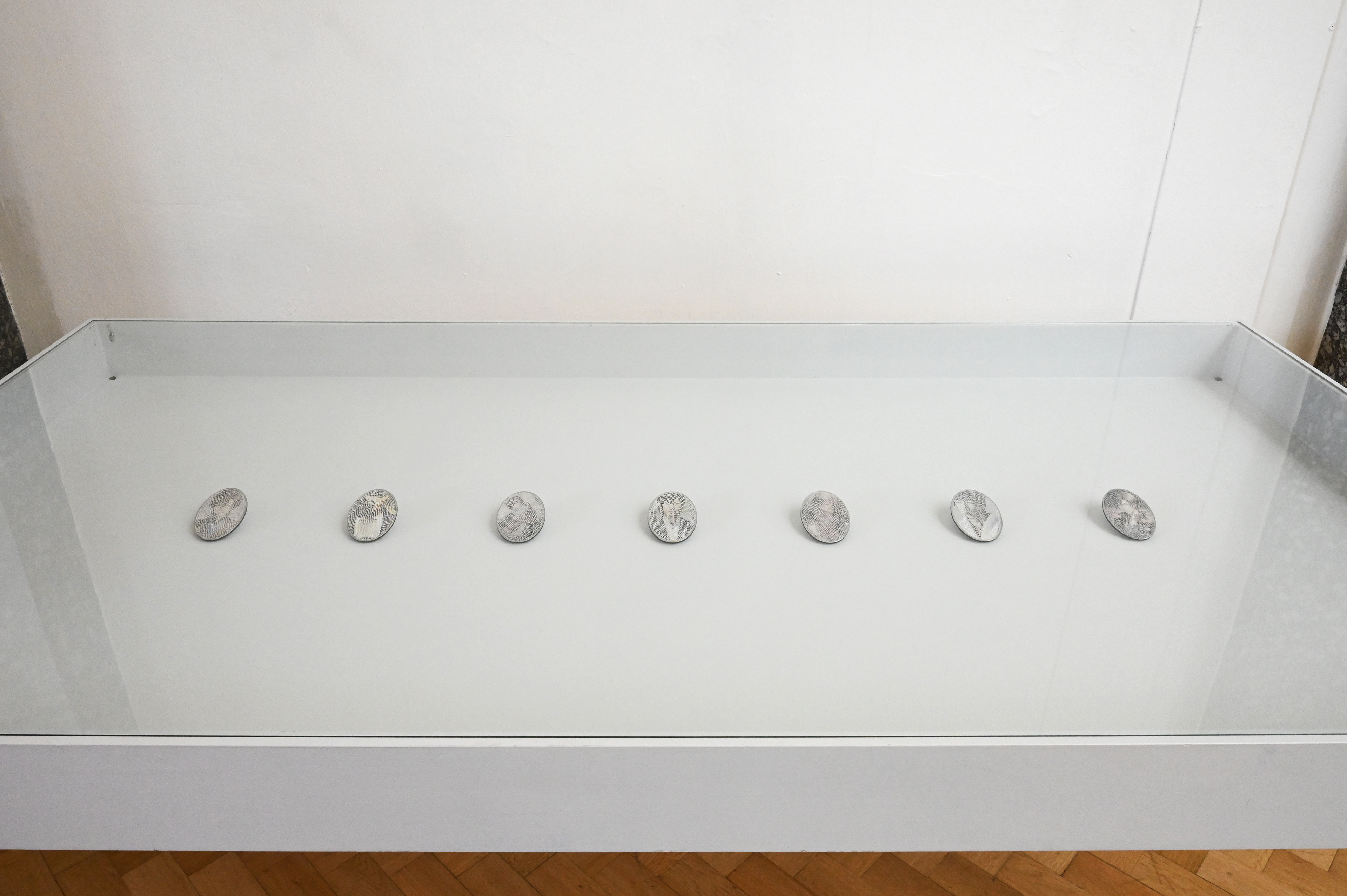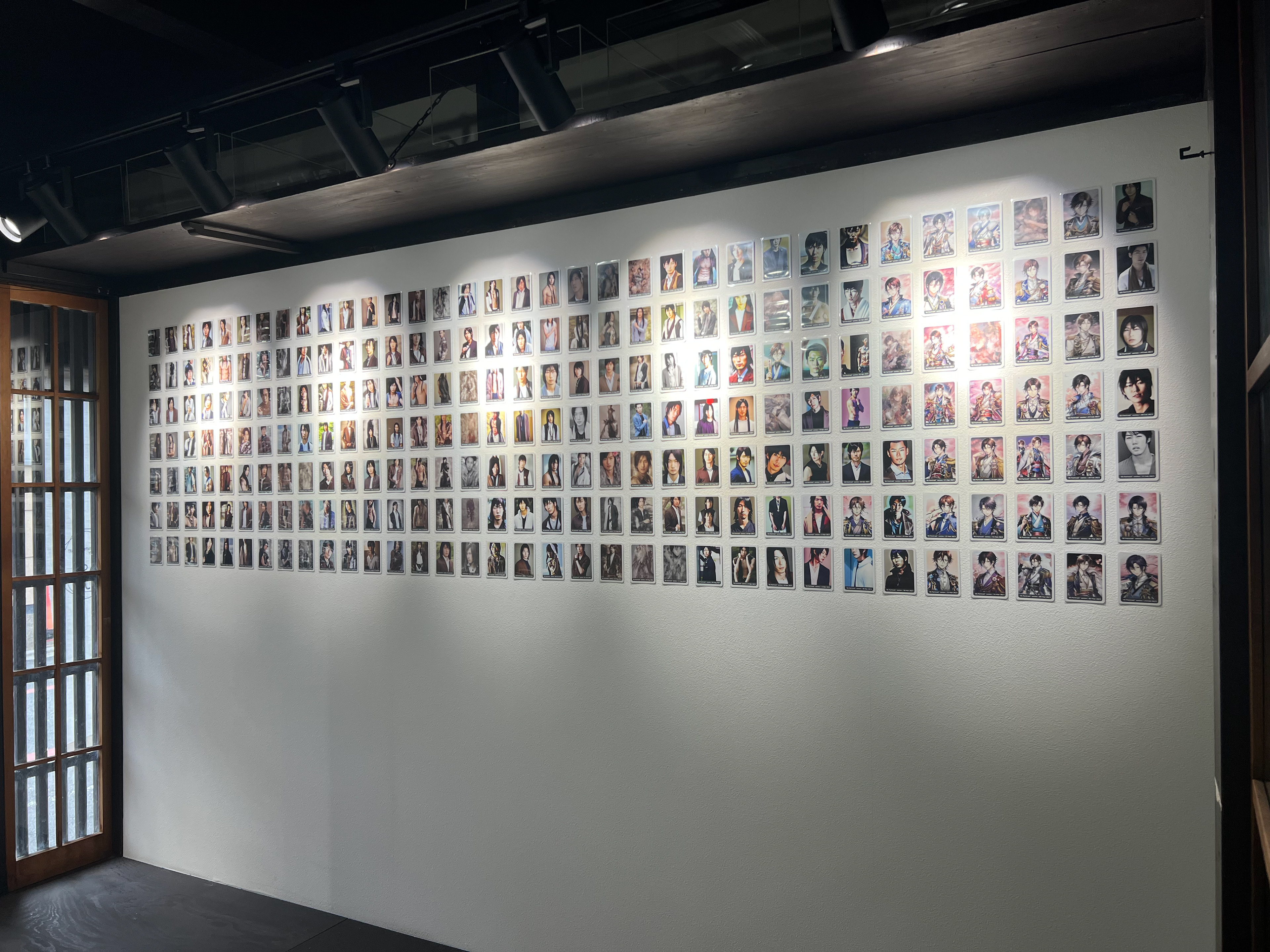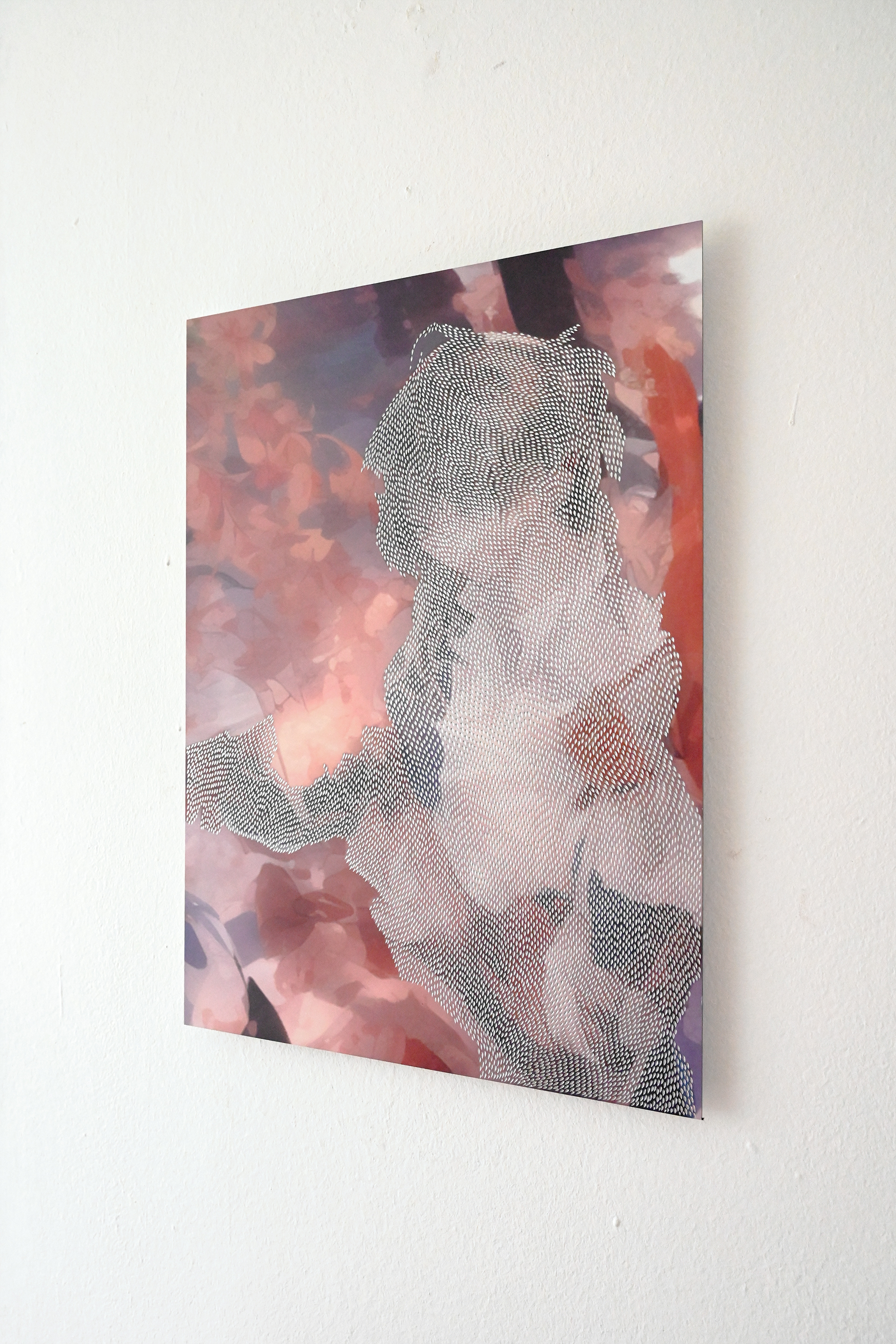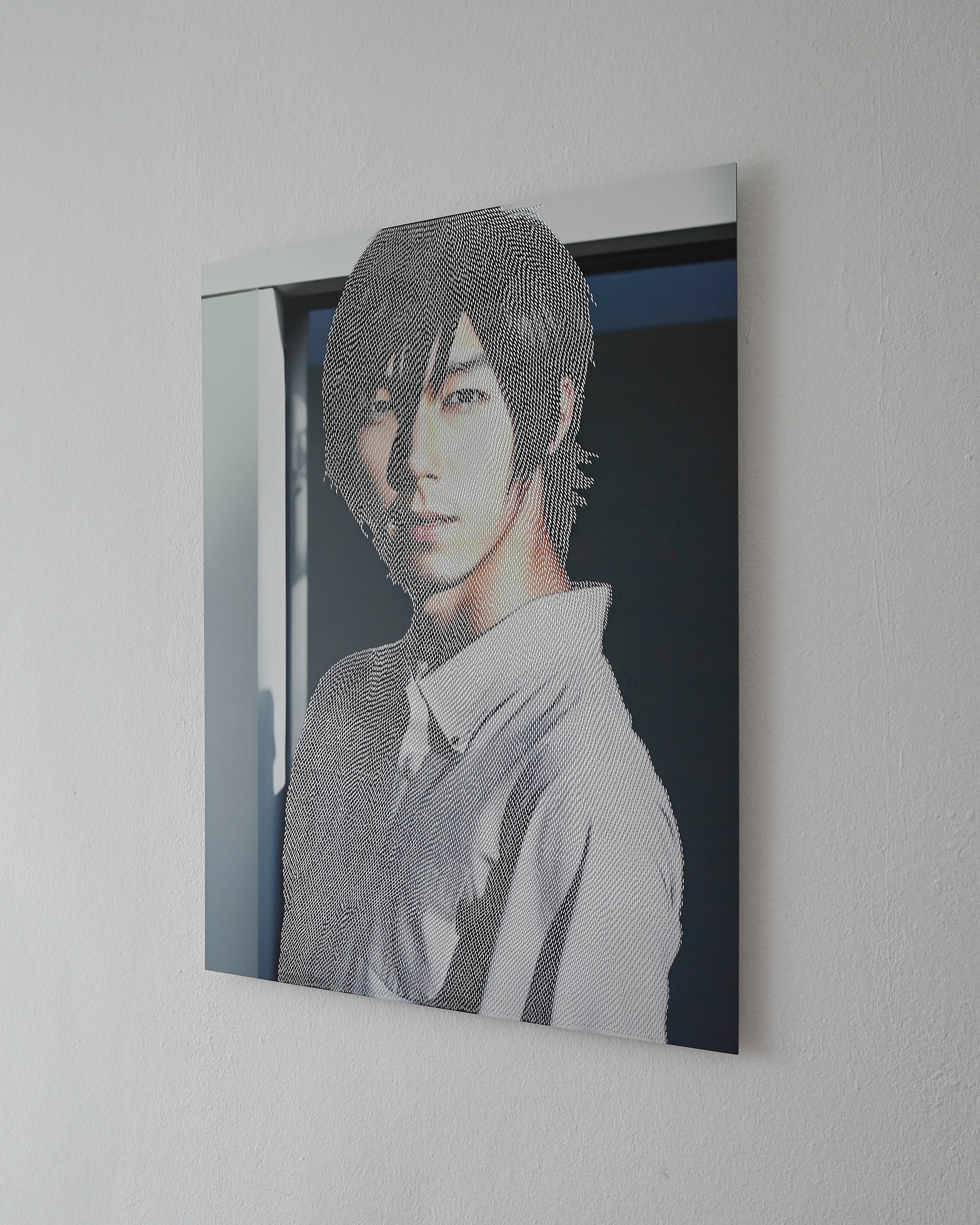
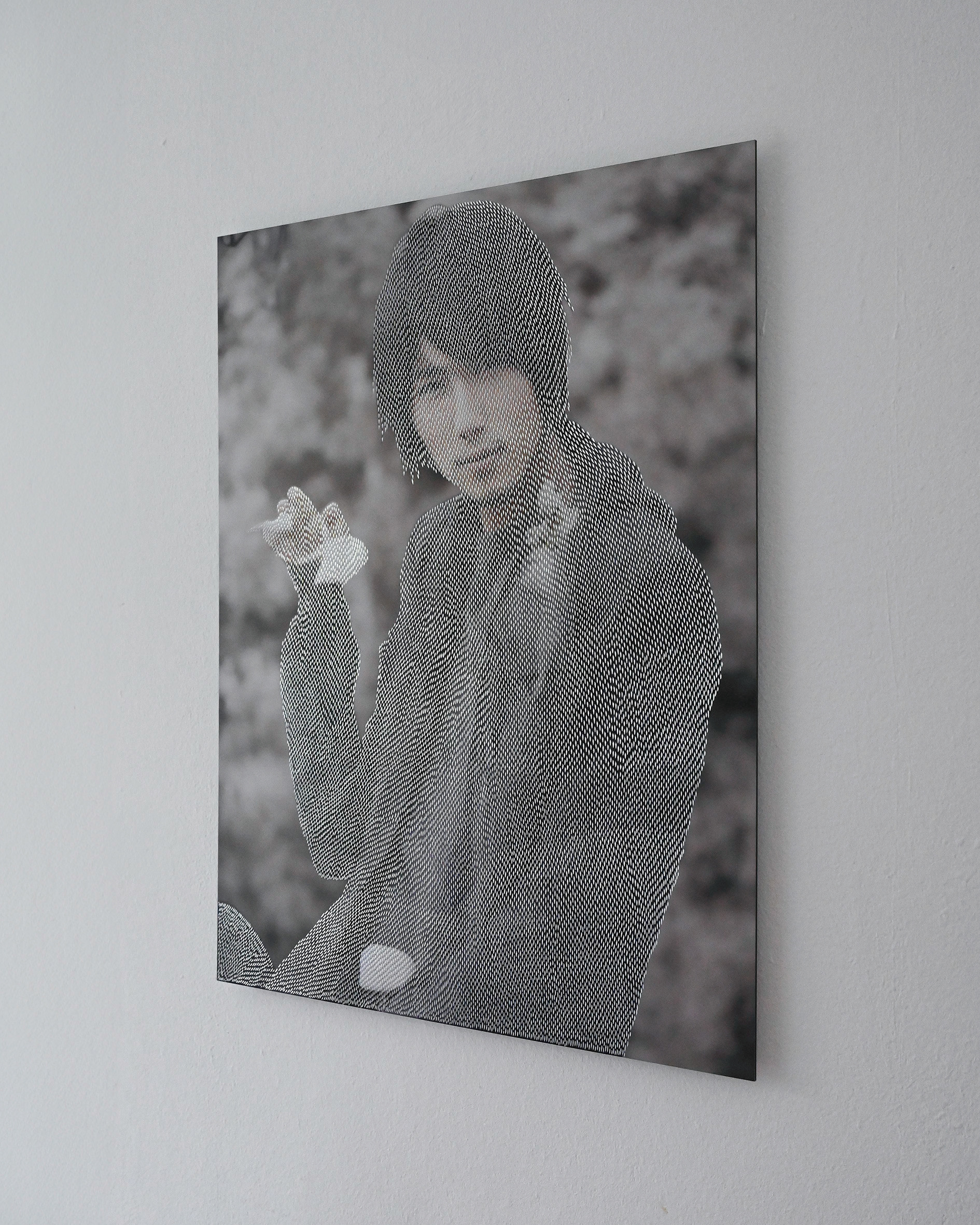
This series consists of portrait works created by printing AI-generated images onto aluminum composite panels and applying traditional Japanese metal engraving techniques. The project emerges from my experience of living abroad as an immigrant, where one’s position can remain unstable under the constant influence of shifting social conditions and institutional regulations. Although one exists as an “individual” within bureaucratic systems, one’s identity is repeatedly defined, managed, and updated through textual descriptions and numerical data recorded in official documents. The disjunction between lived existence and this administrative representation forms the starting point of the work.
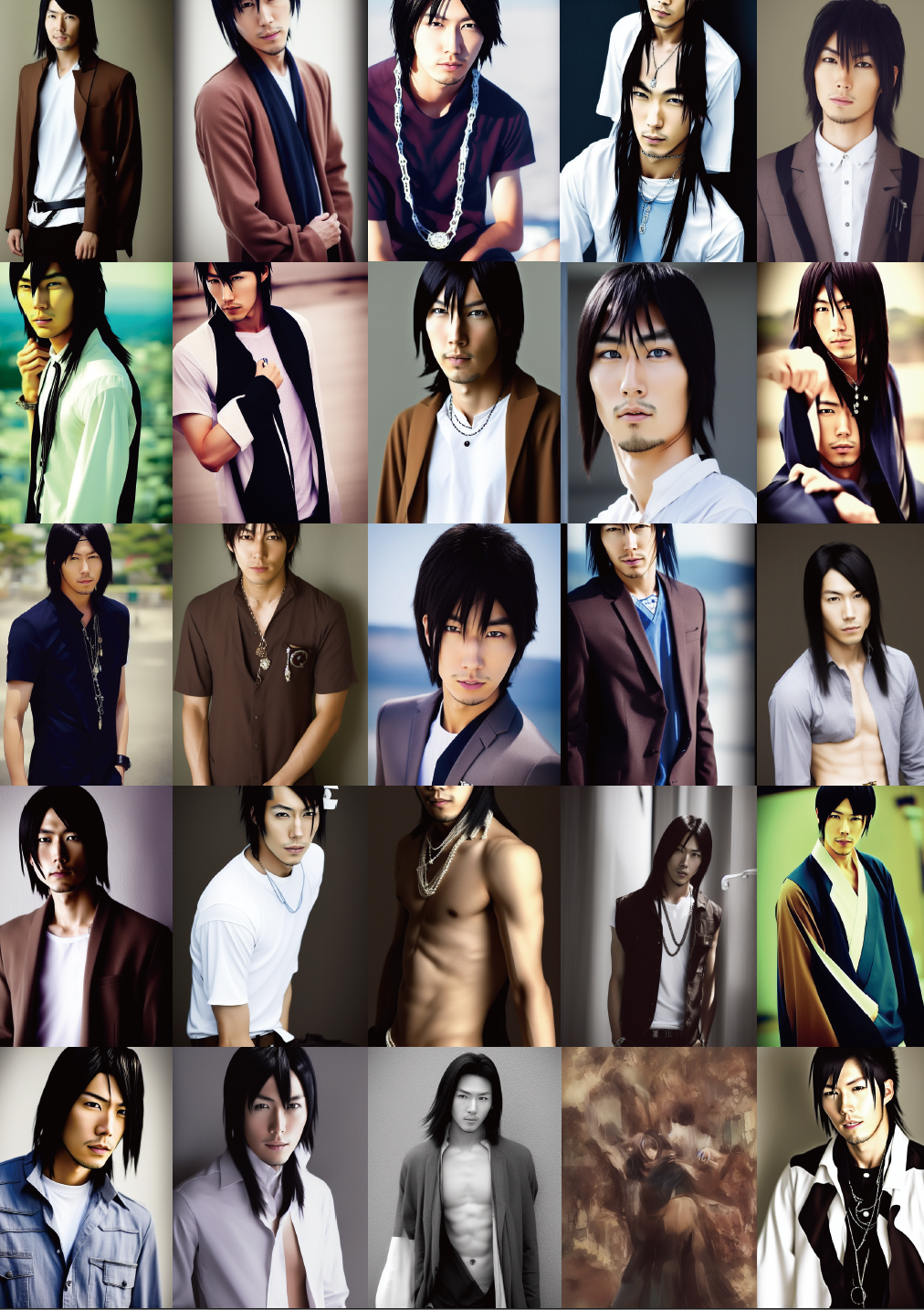
In this series, portraits of myself are repeatedly generated using AI image-generation technology. The input consists of approximately thirty items of personal information required for residence permit applications, including birthplace, eye color, height, and religion. These conditions remain identical each time they are entered into the system. Yet despite this consistency, the resulting images are always different. This non-reproducibility inherent in AI reveals that the image of the self is not fixed, but continuously fluctuates under institutional and social conditions.
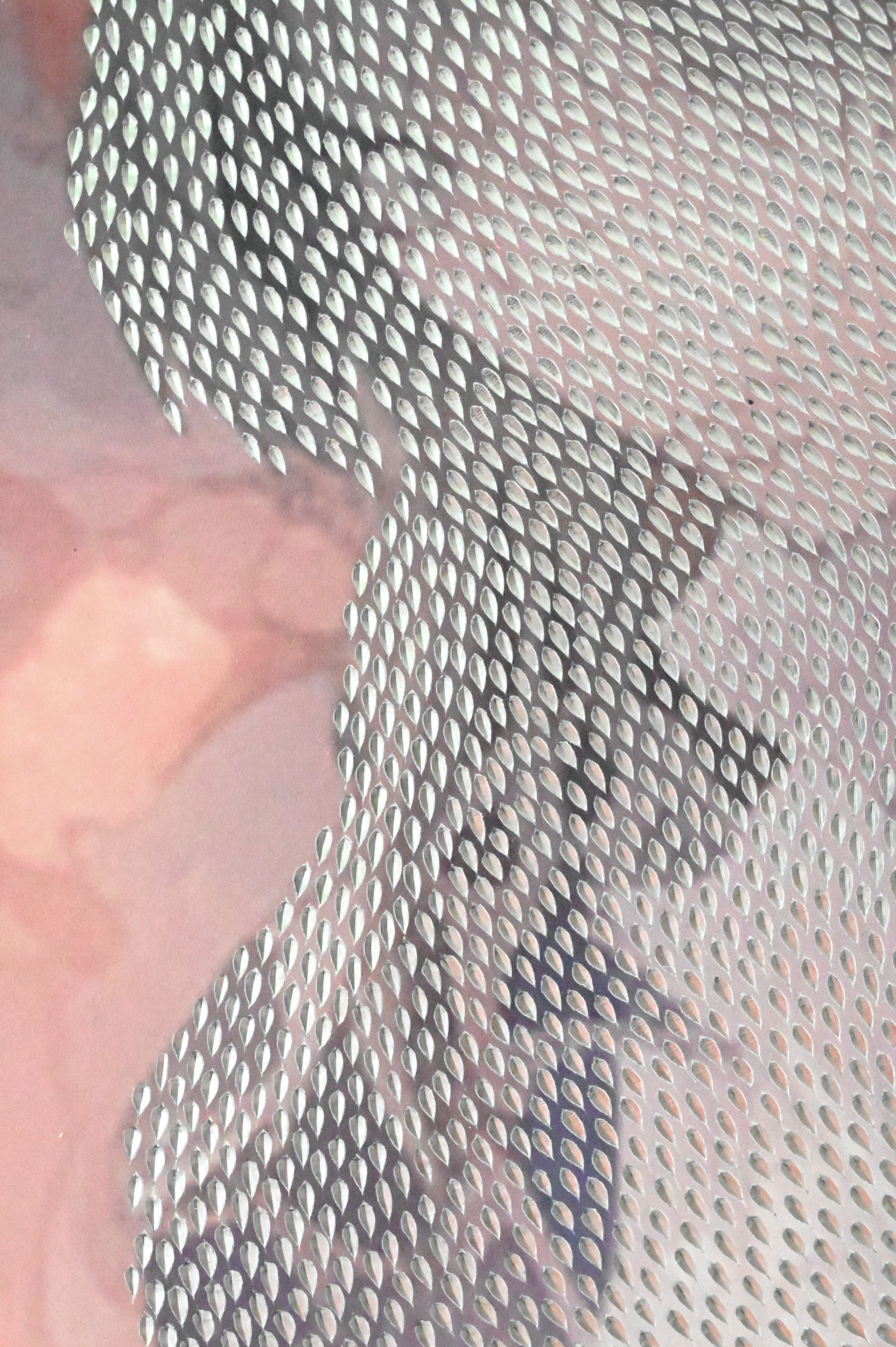
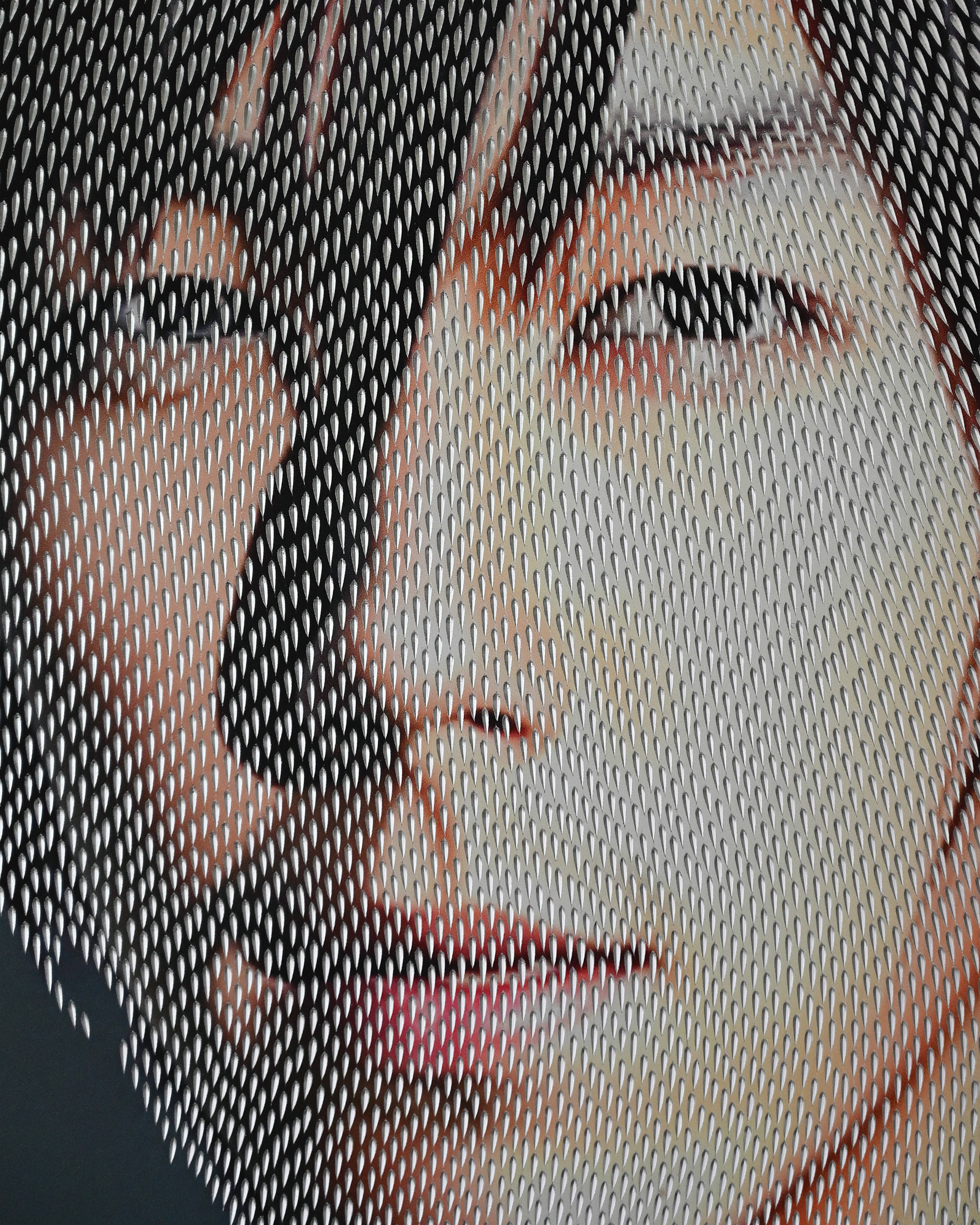
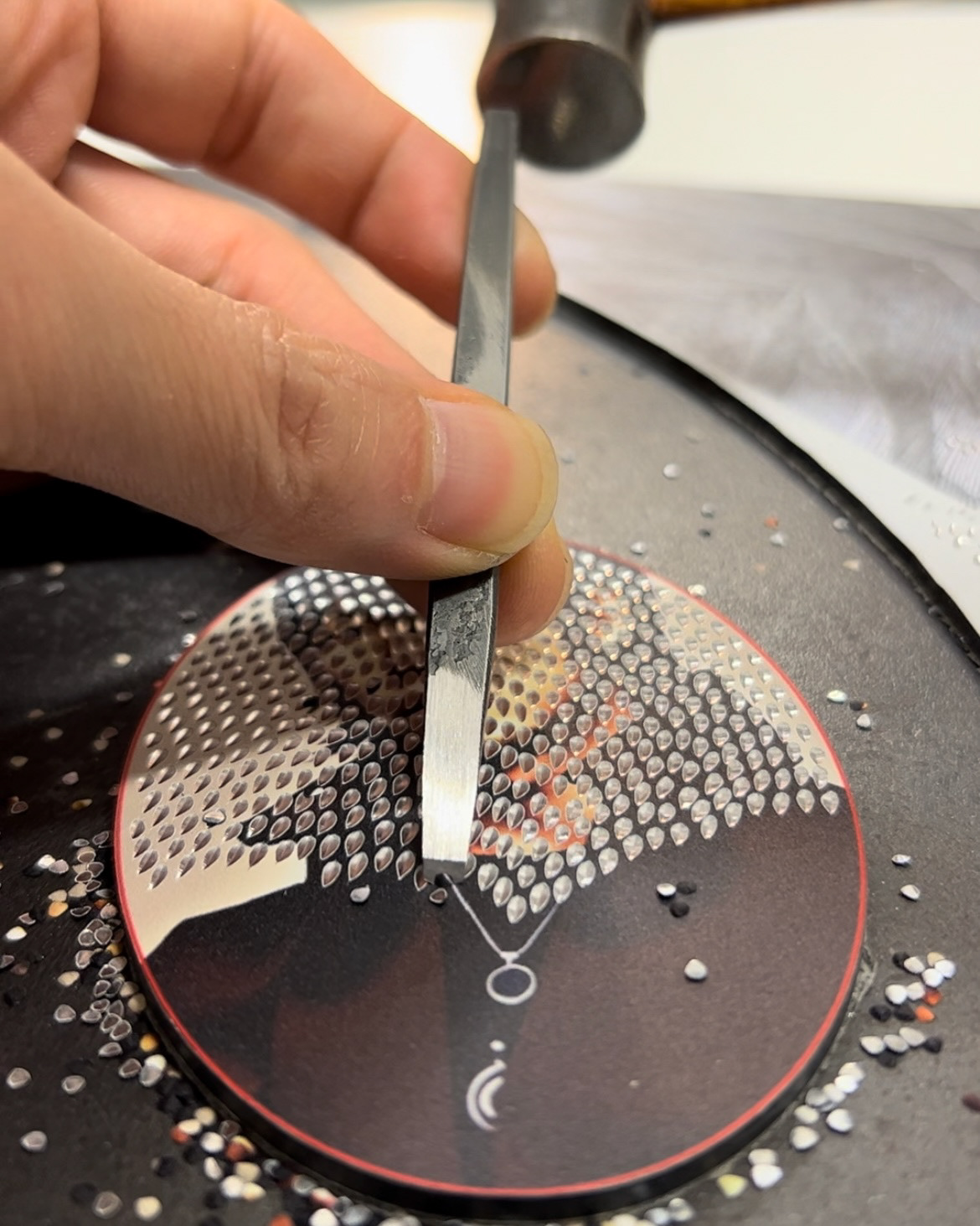
What matters here is not the generated image itself. I intervene in these AI-generated images by carving into them with my own hands using traditional Japanese metal engraving techniques. By introducing a physical resistance to the digitally produced image, information and imagery are obscured, distorted, or partially erased. This process constitutes a bodily intervention into images produced by advanced technology, functioning as a critical gesture toward our blind trust in and dependence on information. Within this act, a tension emerges between mechanical generation and human physical action, inscribed directly into the surface of the work.
The works are supported by aluminum composite panels. Developed in the late 1960s, this material has been widely used for signage and architectural facades. While it is typically valued as an industrial product for its durability and workability, I am interested in the way it has seamlessly blended into the visual landscape of contemporary society. Although we encounter this material in our daily lives, what we actually perceive is only the information displayed on its surface, while the substrate itself remains unnoticed. By engraving into the printed image, however, the underlying material emerges beyond the layer of information as a physical presence. Through this intervention, the work recalls the material reality that exists behind the information we constantly consume.
This inquiry is closely connected to the history of portraiture. In Western art, portraits were historically commissioned by monarchs and aristocrats to visualize power and idealized images, often involving deliberate manipulation designed to present the subject favorably. In the sixteenth century, portrait jewelry played an important role in symbolizing royal authority alongside painting and sculpture. Because jewelry could travel with the body and function as diplomatic gifts, it served as an effective medium through which power and loyalty were mediated.
With the emergence of photography in the nineteenth century, portraiture was temporarily understood as an objective means of recording reality “as it is.” However, with the later spread of photo-retouching techniques and digital editing software, portraits once again became tools for idealization. Today, generative AI accelerates this trajectory. Trained on vast datasets, AI automatically produces images of how one “should” appear, reflecting social norms and unconscious desires. Under such conditions, the self-image can no longer be controlled solely by individual intention, but continues to be reshaped by institutions and algorithms.
Many of the images generated by AI differ greatly from my actual appearance. Yet through the repeated submission of personal information while living abroad, a growing sense emerges that textual information itself may be what defines the individual. Today we live in an era in which idealized images are imposed upon us from both macro perspectives—such as institutions and social norms—and micro perspectives, including algorithms and personal data. This series questions how the figure of “the self” is formed under such layered pressures and critically examines how text, images, and data operate together to construct that image.
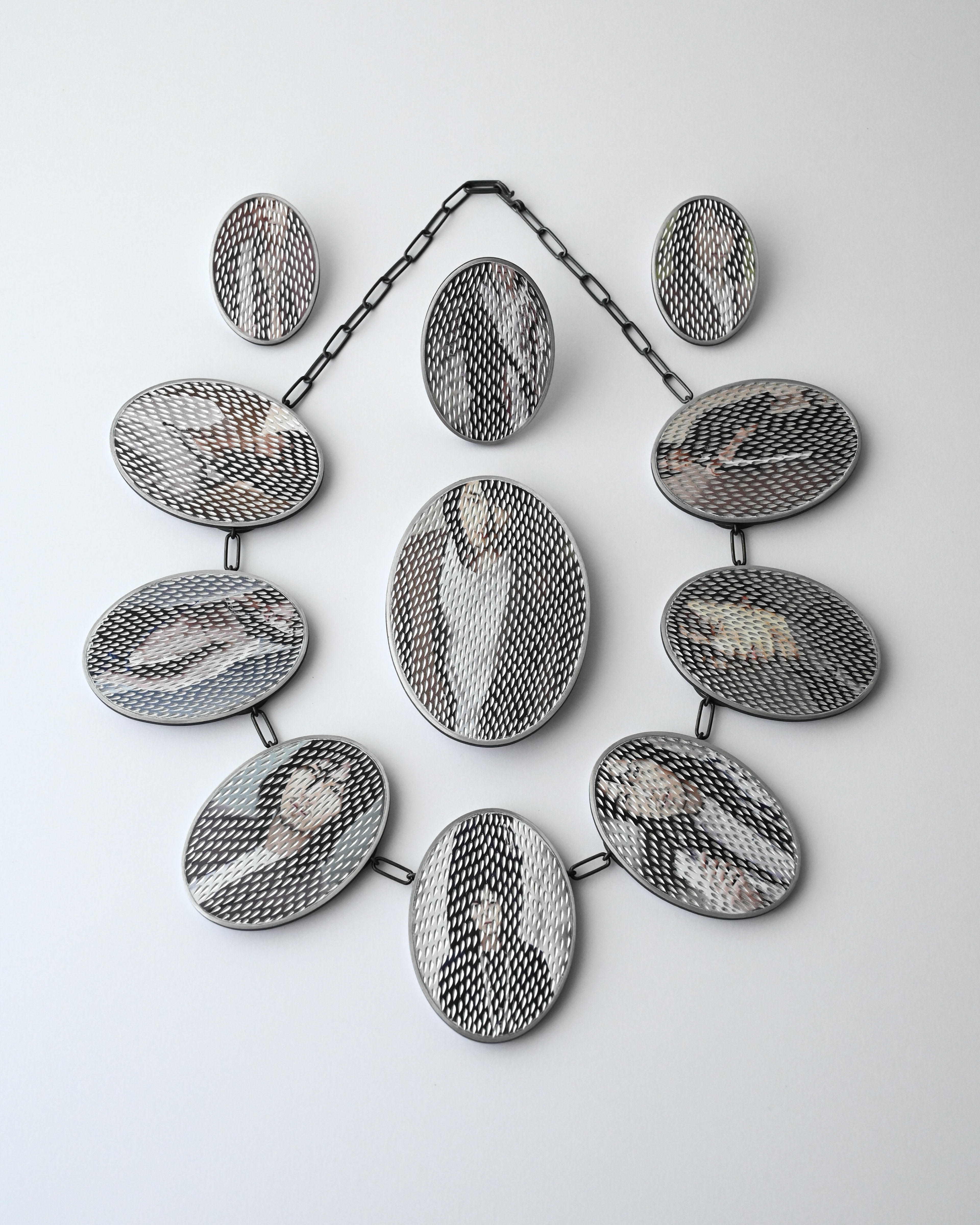
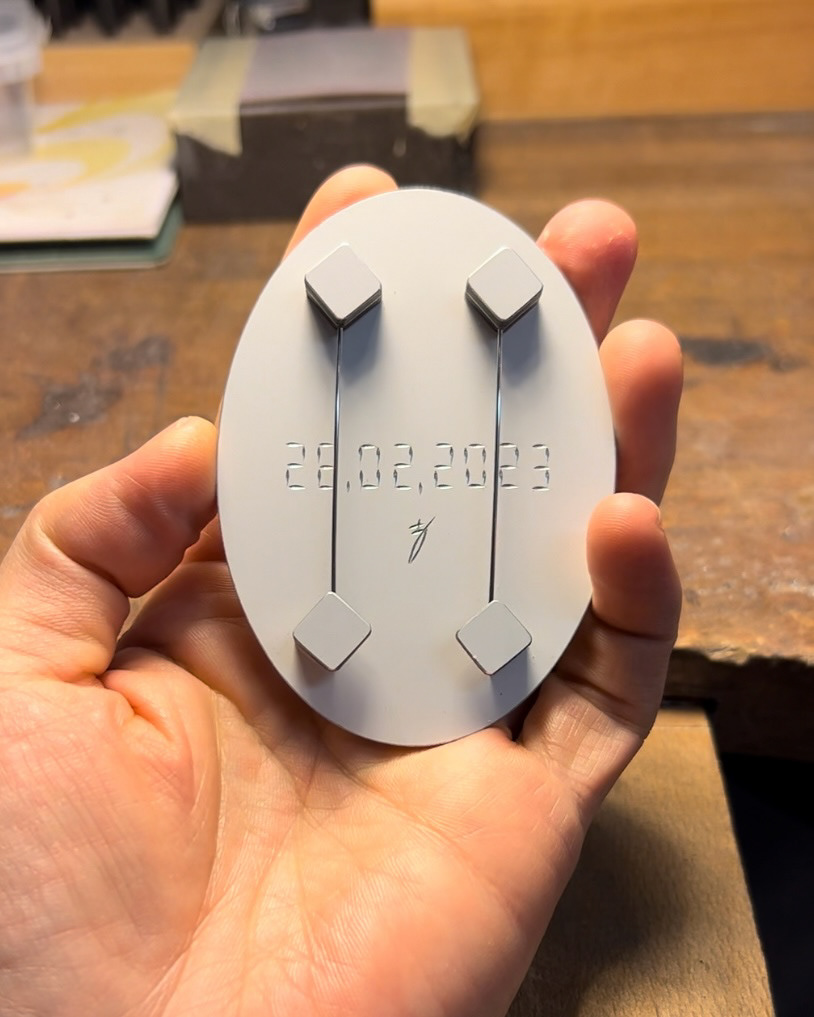
The series is governed by a strict set of rules. Only one AI-generated portrait is produced per day, always using the same set of personal information as the prompt. At the beginning of each month, I craft a new chisel myself and use it for all works created during that month. If a mistake occurs during the engraving process, the work is destroyed and restarted from the beginning. The date of image generation is engraved on the reverse side of each finished work. The project ends the moment the AI generates an image that closely resembles the artist himself. Additionally, each generated image is automatically classified by another AI into one of five formats—ring, earring, necklace, brooch, or wall-mounted work—and the artist does not intervene in this decision.
These rules gradually strip the artist of the freedom to choose, embedding within the act of making itself questions about the relationship between humans and machines, the rights of generation and selection, and who ultimately forms the image of the self. Starting from the instability of the self that emerges at the intersection of the immigrant’s precarious position and the rapid advancement of AI technologies, this series presents fictionalized and deliberately obscured portraits as a way of visualizing a condition that anyone living under institutional systems and algorithmic structures may encounter.
本シリーズは、生成AIによって作られたポートレート画像をアルミ複合板に印刷し、日本の伝統的な彫金技法を施した作品群です。海外で移民として生活するなかで、社会情勢や制度変更の影響を直接的に受け続ける不安定な立場に置かれてきた経験を背景として成立しています。制度上は「個人」として存在しているにもかかわらず、その輪郭が申請書類に記載される文字情報や数値データによって定義され、管理され、更新されていく。その実感と現実との乖離こそが、本作の出発点です。
本シリーズでは、AIによる画像生成技術を用いて、私自身のポートレートが反復的に生成されます。入力されるのは、滞在許可証の申請に際して求められる出生地、目の色、身長、宗教など約30項目に及ぶ個人情報であり、それらは常に同一の条件としてAIに与えられます。しかし、同じ情報を入力しても生成される像は毎回異なります。このAI特有の非再現性は、自己像が固定されたものではなく、制度や社会的条件のもとで常に揺れ動くものであることを可視化します。
重要なのは、生成されたイメージそのものではありません。私は、AIによって生成された画像に対して、日本の伝統的な彫金技法を用い、自らの手で削り取る行為を重ねています。デジタルによって与えられた像に物理的な抵抗を加えることで、情報やイメージは不可視化され、歪められ、あるいは失われていきます。このプロセスは、最新のテクノロジーが生み出す像に対し、身体を介した手仕事によって介入する行為であり、情報に対する盲目的な信頼や依存への批評的な身振りとして機能しています。そこには、機械的生成と人間の身体行為とのあいだに生じる緊張関係が刻み込まれています。
作品の支持体にはアルミ複合板を使用しています。この素材は1960年代後半に開発され、主に看板や建築外装などに用いられてきました。優れたプロダクトとして耐久性や加工性が評価されていますが、私はむしろ、それが現代社会の風景に深く溶け込んでいる状況に注目しています。私たちは日常的にこの素材を目にしていますが、そこに見ているのはあくまで表面に表示された情報であり、支持体そのものが意識されることはほとんどありません。しかし、印刷された画像の表面を彫ることで、これまで背景として隠れていた支持体が、情報を越えて物質として立ち現れてきます。この操作は、私たちが日常的に消費している情報の背後に潜む、物理的な存在を想起させるものでもあります。
この問いは、ポートレートの歴史とも接続しています。西洋美術においてポートレートは、王侯貴族が権力や理想像を可視化するために画家や職人へ依頼したものであり、そこには常に「よく見せる」ための操作が介在してきました。16世紀には、統治者の権力を象徴する手段として、絵画だけでなくポートレート・ジュエリーが重要な役割を果たしていたことが知られています。ジュエリーは身体とともに移動可能であり、贈答品としても機能する点において、権力や忠誠を媒介する有効な装置でした。
19世紀に写真が登場すると、ポートレートは一時的に「ありのまま」を記録する手段として受け止められるようになります。しかし、その後の写真加工技術や編集ソフトの普及によって、肖像は再び理想化の装置へと回帰していきました。そして現在、生成AIは膨大なデータを学習し、社会的規範や無意識的欲望を反映させながら、自動的に「こうあるべき姿」を生成する存在となっています。そこでは自己像はもはや個人の意思だけでは制御できず、制度やアルゴリズムによって更新され続けるものとして立ち現れます。
AIによって生成された像の多くは、現実の私自身とは大きく異なります。しかし、異国で生活するなかで繰り返し求められる個人情報の提出を通して、次第に「文字情報」そのものが個人を規定しているのではないかという感覚が生まれてきました。今日、私たちは制度や社会規範といったマクロな視点から、同時にアルゴリズムや個人データといったミクロな視点からも、理想像を押し付けられる時代に生きています。本シリーズは、そうした多層的な圧力のもとで形成される自己像に疑問を投げかけ、文字・画像・データがどのように作用しながら「私」という像を構築しているのかを批評的に検証する試みです。
本シリーズは厳密なルールに基づいて運用されています。AIによるポートレート生成は1日につき1枚のみとし、常に同一の個人情報プロンプトを使用します。月ごとに新たな鏨を一本自ら制作し、その月に生成されたすべての作品に用います。彫り工程で失敗が生じた場合、その作品は破棄され、制作は最初からやり直されます。完成作品の裏面には画像生成日が刻印され、作家本人と酷似したAI画像が生成された時点で本プロジェクトは終了します。また、生成された画像は別のAIによって「指輪・イヤリング・ネックレス・ブローチ・平面作品」という五つの形式のいずれかに自動分類され、その判断に作家は介入しません。
これらのルールは、制作過程における作家の「選ぶ自由」を段階的に剥奪しながら、人間と機械の関係性、生成と選定の権利、そして自己像が誰によって、どのように形成されているのかという問いを、日々の制作行為そのものに内在化させる構造を持っています。本シリーズは、移民という不安定な立場に置かれた一個人の経験と、急速に進展するAI技術が交差する地点から立ち上がった「自己」の揺らぎを起点としながら、制度やアルゴリズムのもとで生きる私たち誰もが直面し得る状況を、架空かつ見えにくくされたポートレート像として提示しています。
Variable functional modes: Ring, Earring, Necklace, Brooch, Wall-mounted object / 2023-
Ring, 60x42x25mm / Earrings, 50x35x13mm / brooch, 90x63x10mm
Necklaces, 70x6mm, 620mm(length) / Wall-mounted object, 600x450x5mm
Personal information, Image Generation AI, UV direct print, Engraved aluminium composite panel
個人情報、画像生成AI、UVダイレクト印刷、彫金加工を施したアルミ複合板